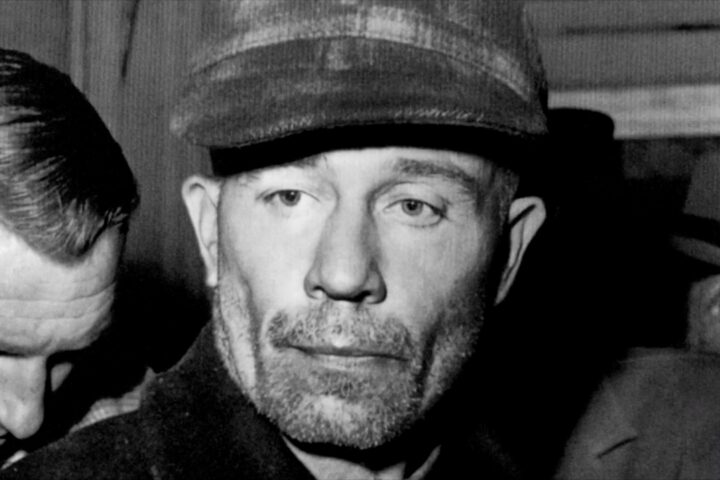

Jeffrey Lionel Dahmer (May 21, 1960 – November 28, 1994) known as the Milwaukee Cannibal or the Milwaukee Monster was an American serial killer and sex offender who killed and dismembered seventeen men and boys between 1978 and 1991.
Early Life
Jeffrey Dahmer was born in Milwaukee, Wisconsin, to Lionel and Joyce Dahmer. From an early age, his home life was unstable due to frequent parental conflict and emotional neglect. He often felt isolated and insecure within his family environment.
At around age four, Dahmer underwent hernia surgery, after which his previously energetic personality reportedly became quieter and withdrawn. During childhood, his family moved frequently across Ohio, further disrupting stability.
Early Fascinations
As a child, Dahmer developed an unusual interest in dead animals and bones. He reportedly became fascinated after observing his father once removing animal remains from beneath their home. This curiosity grew into collecting insect and small animal skeletons, which he sometimes preserved in jars.
Encouraged by his father’s explanation of scientific preservation techniques, Dahmer experimented with bleaching and preserving bones. These early experiences later became relevant in his criminal behavior.
Adolescence
By his teenage years, Dahmer was increasingly isolated at school, where he was seen as eccentric and socially withdrawn, though sometimes humorous and attention-seeking. He began drinking alcohol heavily while still in school.
He also began to recognize his sexual attraction to males but did not disclose this to his family. Over time, his fantasies became more focused on control, dominance, and emotional isolation of a partner.
He admitted later that during his teenage years, he fantasized about controlling an unconscious partner. He also acknowledged a failed attempt to attack a jogger in his youth, which he described as his first intention to harm someone.
Despite his internal struggles, Dahmer graduated high school in 1978. Shortly afterward, his parents divorced, and family instability increased further.
Murders
Murder of Steven Hicks (First murder)
Three weeks after graduating, Dahmer carried out his first murder. Steven Mark Hicks, an 18-year-old hitchhiker, was picked up by Dahmer on June 18. In exchange for “a few beers” with Dahmer, who had the house to himself, Hicks, who had been hitchhiking to a rock performance at Chippewa Lake Park, agreed to go with him.
Dahmer explains that he was aroused by the sight of the bare-chested Hicks by the side of the road, even though he knew that any sexual advances he made would be rejected when Hicks started talking about girls. After talking, drinking, and listening to music for several hours Hicks “wanted to leave and I didn’t want him to leave”. Dahmer used a 10-pound (4.5 kg) dumbbell to beat Hicks. He later claimed that when Hicks was sitting on a chair, he struck him twice from behind with the dumbbell.
After Hicks passed out, Dahmer used the dumbbell’s bar to choke him to death. He then undressed Hicks of his clothes, examined his chest with his hands, and masturbated while standing above thecorpse. Dahmer dragged the body to the basement a few hours later.
Dahmer dissected Hicks’s body in the basement the next day. The corpse was later buried in a shallow grave in his backyard. He unearthed the remains and removed the meat from the bones a few weeks later. Dahmer used a sledgehammer to shatter the bones and dispersed them in the forest behind the family house after dissolving the flesh in acid and then flushing the mixture down the toilet. From the West Bath Road Bridge, he tossed Hicks’s necklace and the knife that was used to dismember him into the Cuyahoga River.
College and Army
When Dahmer’s father and fiancée came to his house six weeks after Hicks was killed, they found Dahmer living alone. Dahmer enrolled at Ohio State University (OSU) in August of that year with the intention of majoring in business.
Thanks to his ongoing alcoholism, Dahmer’s one and only semester at OSU was utterly unsuccessful. His grades were all poor except one course he was good at,which is Riflery, earning a B−. He had a 0.45/4.0 total GPA.
When Lionel once made his son a surprise visit, he discovered empty booze bottles all around his dorm room. Dahmer left OSU after just three months, even though his father had paid for the second term in advance.
Dahmer joined the US Army in January 1979 at his father’s insistence. Prior to receiving medical specialized training at Fort Sam Houston in San Antonio, Texas, he completed basic training at Fort McClellan in Anniston, Alabama. At Fort Sam Houston, he received occasional reprimands for being drunk. Dahmer was severely beaten by his fellow recruits after one incidence of insubordination led to the punishment of his entire unit.
Dahmer was sent to Baumholder, West Germany, on July 13, 1979, to work as a combat medic in the 2nd Battalion, 68th Armored Regiment, 8th Infantry Division. Public records state that Dahmer was a “average or slightly above average” soldier during his first year of service.
Dahmer’s performance declined as a result of his alcoholism, and he was later released from the Army in March 1981 after it was determined that he was unfit for military duty. Because his superiors did not think that Dahmer’s issues in the Army would apply to civilian life, he was honorably discharged.
On March 24, 1981, Dahmer was transported to South Carolina for debriefing and given an airline ticket to anyplace in the US. Dahmer eventually told authorities that he was unable to return home to face his father, so he chose to fly to Miami Beach, both because he was “tired of the cold” and in an attempt to live independently. In Florida, Dahmer found job in a delicatessen and rented a room at a nearby motel. He spent the majority of his paycheck on alcohol and was eventually booted from the hotel for nonpayment. Dahmer spent his evenings on the beach before calling his father and begging to return to Ohio.
Return to Ohio and relocation to West Allis, Wisconsin
After returning to Ohio, Dahmer originally lived with his father and stepmother, and insisted on being assigned various chores to keep him busy while he sought for job. He continued to drink frequently, and two weeks later, he was arrested for drunk and disorderly conduct. He received a $60 fine and a suspended 10-day prison term. Dahmer’s father tried unsuccessfully to wean his son from drinking. In December 1981, his father sent him to live with Catherine Dahmer, his paternal grandmother, in West Allis, Wisconsin. She was the only family member to whom Dahmer expressed positive affection.
Initially, Dahmer’s life with his grandmother was relatively stable. He attended church with her, did chores, looked for work, and mostly followed house rules, though he still drank and smoked. In 1982, he worked as a phlebotomist at a blood plasma center for about ten months before being laid off, after which he remained unemployed for over two years and depended on his grandmother financially.
During this period, he was also arrested for indecent exposure in 1982 at the Wisconsin State Fair Park and was fined. In 1985, he found work at a chocolate factory on night shifts. Around this time, an encounter at a library and exposure to Milwaukee’s gay scene reportedly intensified his fantasies. He also stole a mannequin for sexual purposes, which his grandmother later discovered and made him discard.
By late 1985, Dahmer began regularly visiting bathhouses, which he later described as “relaxing,” though he became frustrated when partners moved during sex. He later admitted he started seeing people as “objects of pleasure,” and in June 1986 began drugging partners with sedatives in alcohol so they would remain unconscious. He obtained the medication by telling doctors he worked night shifts. After multiple incidents, he was banned from bathhouses and continued the behavior in hotel rooms.
Around the same time, he read about an upcoming funeral and considered digging up a recently buried body, but abandoned the attempt due to hard ground.
In September 1986, he was arrested for indecent exposure involving two boys near the Kinnickinnic River. He first claimed he was urinating but later admitted the act. The charge was reduced to disorderly conduct, and in 1987 he received probation and was ordered to attend counseling.
Contiuning Murders
In November 1987, Dahmer met 25-year-old Steven Tuomi at a bar and brought him to a room at the Ambassador Hotel. He later claimed he intended only to drug him and be with him, not kill him, but the next morning Tuomi was found dead with severe injuries. Dahmer said he had no memory of the incident.
He then bought a suitcase and transported the body to his grandmother’s home, where he dismembered it about a week later. He separated the body into parts, disposed of most remains in garbage bags, and attempted to destroy the bones.
Dahmer kept Tuomi’s head for about two weeks before boiling it in chemicals in an attempt to preserve the skull, which he later used before eventually disposing of it.
After Tuomi’s death, Dahmer later claimed he stopped trying to control his urges and began actively seeking victims, often meeting them near gay bars and bringing them to his grandmother’s home. He typically drugged them with sedatives during or after sexual activity and then strangled them once they were unconscious.
In early 1988, he killed 14-year-old James Doxtator after luring him with money for nude photos, then drugging and strangling him in the basement. He dismembered the body days later and disposed of most remains, later destroying the skull after attempting to preserve it.
In March 1988, he met Richard Guerrero outside a bar, brought him home under similar pretenses, drugged and strangled him, and again dismembered the body within a day, disposing of most remains while briefly keeping the skull before destroying it.
In April 1988, Dahmer drugged Ronald Flowers Jr. after luring him home under false pretenses. However, his grandmother unexpectedly called while Flowers was there, and Dahmer ultimately decided not to kill him. Flowers later woke up in a hospital with injuries and confusion about what had happened.
In September 1988, Dahmer’s grandmother asked him to move out due to his behavior and suspicious activity in the house. He moved into an apartment shortly after, but was arrested two days later for drugging and sexually assaulting a 13-year-old boy he had invited over.
He underwent psychological evaluations, which noted feelings of alienation and impulsive behavior, along with a previous diagnosis of schizoid personality disorder. In January 1989, he pleaded guilty to charges of sexual assault and enticing a child, with sentencing delayed until later that year.
In March 1989, Dahmer met 24-year-old Anthony Sears at a gay bar and brought him to his grandmother’s home. He later said he did not initially intend to commit a crime, but ended up drugging and strangling Sears after they were together.
The next day, he dismembered the body in the bathtub, removed the flesh, and disposed of most remains. Unlike previous victims, he kept Sears’ head and genitalia, preserving them in chemicals and storing them in a box, which he later moved between locations.
On May 23, 1989 Dahmer was sentenced to five years’ probation and one year in the House of Correction, with work release permitted so he could keep his job. He was also required to register as a sex offender.
Two months before his scheduled release, Dahmer was paroled from this regimen.
Dahmer temporarily moved back to his grandmother’s home in West Allis.
Meurtres des Oxford Apartments en 1990
En mai 1990, Dahmer a quitté le domicile de sa grand-mère pour s’installer dans l’appartement 213 au 924 North 25th Street à Milwaukee, emportant avec lui les restes préservés d’Anthony Sears. L’appartement était modeste mais pratique pour son travail et suffisamment bon marché à entretenir, et il allait devenir le lieu principal de ses crimes ultérieurs. Une semaine après son emménagement, il a rencontré Raymond Smith, un homme de 32 ans qu’il a attiré dans l’appartement avec la promesse d’argent en échange de relations sexuelles. Une fois à l’intérieur, Dahmer l’a drogué avec une boisson contenant des somnifères, puis l’a étranglé. Après la mort de Smith, Dahmer a entamé un processus plus méthodique : il a pris des photos Polaroid du corps, l’a démembré dans la salle de bain et a utilisé des méthodes chimiques et l’ébullition pour séparer la chair des os. Il a plus tard dissous une grande partie du squelette restant dans de l’acide, tout en conservant le crâne. Le crâne de Smith a été peint à la bombe et stocké aux côtés d’autres restes préservés. Peu après ce meurtre, Dahmer a tenté de répéter le même schéma avec un autre homme. Cependant, il a accidentellement consommé lui-même la boisson droguée et a perdu connaissance. À son réveil le lendemain, il a découvert que l’homme avait volé de l’argent, des vêtements et une montre dans son appartement. Bien qu’ébranlé par l’incident, Dahmer ne l’a pas signalé à la police, mais il a mentionné le vol plus tard à son agent de probation. En juin 1990, Dahmer a amené Edward Smith, âgé de 27 ans, dans son appartement, où il l’a drogué et étranglé. Après le meurtre, il a modifié son processus habituel, plaçant le squelette dans un congélateur pendant des mois pour tenter de le préserver et de réduire l’humidité avant un traitement ultérieur. Cependant, la méthode a échoué et il a fini par acidifier les restes de toute façon. En essayant de sécher le crâne à la chaleur, celui-ci a été endommagé et finalement détruit. Dahmer a plus tard déclaré à la police qu’il se sentait « pourri » à propos de ce meurtre car il n’avait pu préserver aucune partie du corps de Smith. Moins de trois mois après le meurtre d’Edward Smith, Dahmer a rencontré Ernest Miller, âgé de 22 ans, devant une librairie et l’a attiré dans son appartement contre de l’argent. Miller a accepté de l’accompagner et a permis à Dahmer d’examiner son corps, mais lorsque Dahmer a tenté un contact sexuel, Miller a exigé un paiement supplémentaire. Dahmer l’a alors drogué avec des somnifères. Comme il n’avait pas une quantité suffisante de sédatifs, Dahmer a tué Miller en lui tranchant l’artère carotide. Il est mort en quelques minutes. Dahmer a ensuite photographié le corps, l’a mis en scène et l’a placé dans la baignoire pour le démembrer. Pendant le processus, il aurait parlé à la tête coupée et l’aurait embrassée tout en poursuivant le démembrement. Après le meurtre de Miller, Dahmer a démembré le corps et a stocké des parties des organes et de la chair dans son congélateur. Il a plus tard fait bouillir les restes pour en faire une substance gélatineuse afin de séparer la chair des os, qu’il a ensuite nettoyés et préservés. Il a également traité le crâne, le réfrigérant initialement avant de le nettoyer, de le peindre et de le recouvrir. Environ trois semaines plus tard, il a rencontré David Thomas et l’a amené dans son appartement sous le même prétexte d’argent et de photos. Après l’avoir drogué, Dahmer a déclaré qu’il n’était pas particulièrement attiré par lui, mais qu’il l’avait tué pour éviter qu’il ne se réveille en colère ou ne cause des problèmes. Il a démembré le corps mais n’a conservé aucun reste, bien qu’il ait documenté le processus avec des photographies. Après cela, Dahmer n’a plus tué pendant plusieurs mois, bien qu’il ait tenté à plusieurs reprises et sans succès d’attirer de nouvelles victimes. Durant cette période, il a signalé à son agent de probation une anxiété, une dépression, un isolement, un stress financier croissants et des pensées suicidaires occasionnelles.
Meurtres de 1991
In February 1991, Jeffrey Dahmer lured 17-year-old Curtis Straughter to his apartment under the pretense of paying for nude photos, subsequently drugging and strangling him before dismembering the body. Dahmer retained Straughter’s skull, hands, and genitals, documenting the dismemberment. Less than two months later, Dahmer encountered 19-year-old Errol Lindsey, whom he drugged and experimented on by injecting hydrochloric acid into his skull. After Lindsey awoke and expressed discomfort, Dahmer killed him as well, decapitating and flaying the body while attempting to preserve the skin before ultimately discarding it due to deterioration.
By 1991, neighbors at the Oxford Apartments frequently complained to the building manager about strong foul odors, along with strange noises coming from Dahmer’s apartment. Dahmer explained the smells as a broken freezer or dead fish, and the complaints were not escalated further at the time.
On May 24, 1991, he met 31-year-old Tony Hughes at a nightclub and lured him to his apartment with a promise of money for photos. Hughes was drugged into unconsciousness, and Dahmer attempted to drill into his skull and inject hydrochloric acid in an effort to control him, but the procedure proved fatal.
On May 26, 1991, Jeffrey Dahmer encountered 14-year-old Konerak Sinthasomphone on Wisconsin Avenue. Unbeknownst to Dahmer, Sinthasomphone was the younger brother of a boy Dahmer had previously molested in 1988. Dahmer persuaded Sinthasomphone, initially reluctant, to accompany him to his apartment for Polaroid pictures. After posing for two pictures in his underwear, Dahmer drugged him into unconsciousness and performed oral sex on him. Before losing consciousness, Sinthasomphone was led into Dahmer’s bedroom, where the naked body of Tony Hughes, whom Dahmer had killed three days prior, lay on the floor. Dahmer claimed that he believed Sinthasomphone saw the corpse but did not react, likely due to the effects of the sleeping pills he had taken.
On May 27, Dahmer injected hydrochloric acid into Sinthasomphone’s skull, then consumed several beers while lying next to him before leaving for a bar. Later, he found Sinthasomphone naked on the street, conversing in Lao with three concerned women who had called the police. Dahmer claimed to officers John Balcerzak and Joseph Gabrish that Sinthasomphone was his boyfriend and that his behavior was due to excessive drinking after a quarrel, explaining that he had consumed Jack Daniel’s whiskey that evening.
In a tense incident involving three women and police officers, the women expressed frustration when attempting to alert the officers that Sinthasomphone was injured and in a compromised state, including blood on his testicles and rectal bleeding. Despite this, the officers, having seen only a knee scrape and suspecting intoxication, dismissed the women’s concerns with harsh commands to remain silent. Following the police’s arrival, members of the Milwaukee Fire Department also assessed Sinthasomphone and suggested he needed medical care. However, the police instructed the fire personnel to leave the scene. Officer Richard Porubcan later arrived and, along with his colleagues, escorted both Dahmer and Sinthasomphone to Dahmer’s apartment, during which Dahmer commented positively about the police and the local crime issues.
Inside his apartment, Jeffrey Dahmer attempted to substantiate his claim of a romantic relationship with Sinthasomphone by presenting officers with two semi-nude Polaroid photos of Sinthasomphone. While officer Balcerzak reported no unusual smells, officer Gabrish detected an odor resembling excrement, which originated from the decomposing body of victim Hughes. Dahmer claimed that one officer merely peered into the bedroom without conducting a thorough investigation. The officers eventually left, categorizing the situation as a “domestic dispute” and advising Dahmer to care for Sinthasomphone. Following their departure, Dahmer administered a fatal second injection of hydrochloric acid into Sinthasomphone’s brain. On May 28, he took a leave from work to dismember the bodies of both victims and retained their skulls.
On June 30, Jeffrey Dahmer traveled to Chicago, where he met 20-year-old Matt Turner at a bus station. Turner accepted Dahmer’s offer for a photo shoot in Milwaukee, where Dahmer drugged, strangled, and dismembered him, storing his head and internal organs in plastic bags in the freezer. Turner’s disappearance went unreported. Five days later, on July 5, Dahmer lured 23-year-old Jeremiah Weinberger from a Chicago bar. After drugging him, Dahmer injected boiling water into Weinberger’s skull, leading to a coma and subsequent death two days later.
On July 15, Dahmer met 24-year-old Oliver Lacy, who was persuaded to pose for nude photographs. After engaging in sexual activity, Dahmer drugged Lacy, attempting to make him unconscious with chloroform. Dahmer subsequently strangled Lacy, engaged in sexual acts with the corpse, dismembered him, and stored parts of him in the refrigerator and freezer. Following the news of his job dismissal on July 19, Dahmer enticed 25-year-old Joseph Bradehoft to his apartment. After strangling Bradehoft, Dahmer left the body covered on his bed for two days, finding it infested with maggots upon uncovering it. He decapitated Bradehoft, cleaned the head, and preserved it in the refrigerator, later acidifying the torso alongside two other victims from the preceding month.
Arrest
On July 22, 1991, Jeffrey Dahmer invited three men to his apartment under the pretense of taking nude photographs and drinking beer, offering them $100 each. Only Tracy Edwards, 32, agreed to go with him. Upon entering, Edwards noticed a foul smell and boxes of hydrochloric acid, which Dahmer claimed were for cleaning. During their interaction, Dahmer attempted to handcuff Edwards, who responded with confusion. After being led to the bedroom, Edwards saw nude male posters and a strong odor coming from a blue 57-gallon drum. Dahmer then brandished a knife, intending to take nude pictures, but as Edwards tried to negotiate for the removal of the handcuffs, Dahmer became distracted, rocking back and forth and chanting. He then laid his head on Edwards’s chest, simultaneously pressing the knife against him, and ominously stated his intention to eat Edwards’s heart.
Edwards attempted to escape from Jeffrey Dahmer by feigning friendship and waiting for an opportune moment. When he asked to use the bathroom during their time together, he seized the chance when Dahmer became distracted. After ensuring that Dahmer was not holding the handcuffs, Edwards assaulted him, knocking him off balance, and fled through the front door. Later, at 11:30 p.m. on July 22, Edwards approached two police officers, showing them the handcuff attached to his wrist and explaining that a “freak” had restrained him. The officers followed Edwards to Dahmer’s apartment, where Dahmer admitted to placing the handcuffs on him without providing a reason. Edwards informed the officers that Dahmer had threatened him with a knife in the bedroom, leading to a tense encounter as Dahmer attempted to retrieve the key to the handcuffs from the bedroom, prompting a warning from one of the officers.
In the investigation of Jeffrey Dahmer’s apartment, Officer Mueller discovered alarming evidence of criminal activity. Under the bed, he found a large knife, and an open drawer contained numerous Polaroid pictures depicting human bodies in various states of dismemberment, suggesting they were taken within the same apartment. Attempting to show these disturbing images to his partner, Mueller expressed disbelief by stating, “These are for real.”
Upon seeing the Polaroids, Dahmer resisted arrest, leading to a physical struggle with the officers, who quickly subdued him and called for backup. While searching Dahmer’s refrigerator, Mueller uncovered the freshly severed head of a black male, intensifying the gravity of the situation. Lying restrained on the floor, Dahmer reportedly remarked, “For what I did I should be dead.”
Further examination by the Milwaukee police’s Criminal Investigation Bureau unveiled a chilling collection: four severed heads in the kitchen, seven skulls—some painted and others bleached—in the bedroom and a closet. Investigators also found blood drippings on a tray in the refrigerator, two human hearts, and a portion of arm muscle, all wrapped in plastic. The freezer contained a complete torso, along with a bag of human organs and flesh frozen to the ice at the bottom.
Investigators at Apartment 213 found two complete skeletons, severed hands, preserved penises, a mummified scalp, and three dismembered torsos dissolving in acid within a 57-gallon drum. Additionally, 74 Polaroid images depicting the dismemberment of victims were recovered. The chief medical examiner remarked that the scene resembled dismantling a museum rather than a typical crime scene.
Beginning on July 23, 1991, Jeffrey Dahmer was interrogated by Detective Patrick Kennedy, resulting in over 60 hours of interviews and a 178-page confession. He waived his right to legal representation, expressing a desire to confess to the murders he committed. Dahmer admitted to killing sixteen young men in Wisconsin since 1987, plus one in Ohio in 1978. Most victims were rendered unconscious before murder, and some had acid or boiling water injected into their brains. Dahmer noted a lack of memory regarding the murder of his second victim, Steven Tuomi, and described a ritualistic practice of posing victims’ bodies before dismemberment.
Dahmer admitted to necrophilia and dismemberment of his victims, beginning by draining blood from their bodies into his bathtub. He removed internal organs and retained specific bones, using Soilax and bleach for preservation. He confessed to consuming parts of three victims and intended to prepare meals with body parts, tenderizing them and adding condiments. Dahmer cited “curiosity” and the desire to feel his victims as a permanent part of him as reasons for his actions.
Jeffrey Dahmer described a compulsion to kill, stating he was “completely swept along” by an incessant desire for beautiful companions. He revealed plans to create a private altar using the skulls and skeletons of his victims, intending to place it on a black table in his living room. This display would feature incense and a blue lamp, with Dahmer sitting in a black leather chair nearby. In an interview, he stated the altar was dedicated to himself, serving as a meditation space from which he believed he could draw power.
On July 25, 1991, Jeffrey Dahmer was charged with four counts of first-degree murder, followed by eleven additional charges related to murders in Wisconsin by August 22. Investigators in Ohio later found bone fragments linked to Dahmer’s first victim, Steven Hicks, leading to a formal charge of Hicks’s murder on September 17. Dahmer was not charged with the attempted murder of Edward or the murder of Tuomi, as there was insufficient evidence and Dahmer had no recollection of Tuomi’s murder. During a preliminary hearing on January 13, 1992, he pleaded guilty but insane to 15 counts of murder.
Trial
Le procès de Dahmer a débuté le 30 janvier 1992 à Milwaukee pour 15 chefs d’accusation de meurtre au premier degré après qu’il a plaidé coupable le 13 janvier, renonçant à son droit de contester sa culpabilité. L’objectif spécifique du procès était de déterminer si Dahmer souffrait d’un trouble mental ou de la personnalité. L’accusation a soutenu qu’aucun trouble n’altérait sa capacité à comprendre ses actes, tandis que la défense a soutenu qu’il souffrait d’une maladie mentale affectant son contrôle des impulsions, principalement sa compulsion nécrophile. Les experts de la défense ont témoigné que l’état mental de Dahmer l’empêchait de conformer son comportement, tandis que le psychiatre de l’accusation a affirmé que Dahmer était calculateur et distinguait le bien du mal, malgré la reconnaissance de sa paraphilie. En fin de compte, les points de vue contrastés sur la santé mentale de Dahmer étaient au cœur des arguments du procès. Le 12 février, le psychiatre légiste Park Dietz a témoigné que Jeffrey Dahmer ne souffrait d’aucune maladie ou déficience mentale lors de ses crimes, soulignant que la planification méticuleuse de Dahmer indiquait des actes prémédités plutôt qu’impulsifs. Dietz a discuté de l’utilisation de l’alcool par Dahmer comme moyen de surmonter ses inhibitions contre le meurtre et l’a identifié à des personnages de films comme L’Exorciste III et Le Retour du Jedi. Il a diagnostiqué chez Dahmer un trouble lié à l’usage de substances, une paraphilie et un trouble de la personnalité schizotypique. D’autres experts, le psychiatre légiste George Palermo et le psychologue clinicien Samuel Friedman, ont offert des perspectives supplémentaires. Palermo a suggéré que les meurtres de Dahmer découlaient de la haine de soi concernant son attirance homosexuelle et a diagnostiqué un trouble de la personnalité mixte sévère, mais l’a jugé légalement sain d’esprit. En revanche, Friedman a décrit Dahmer comme aimable et charmant, attribuant ses actes à un désir de compagnie, diagnostiquant finalement un trouble de la personnalité avec des traits limites et sadiques. Le procès a duré deux semaines, se terminant le 14 février avec les plaidoiries finales des deux avocats. L’avocat de la défense, Gerald Boyle, a souligné que les meurtres compulsifs de Jeffrey Dahmer étaient dus à une maladie mentale, le dépeignant comme un individu profondément malade et solitaire incapable de contrôler ses actes. En revanche, le procureur Michael McCann a décrit Dahmer comme sain d’esprit et maître de lui-même, affirmant qu’il tuait pour dominer ses victimes et conservait leurs corps pour un plaisir sexuel prolongé. McCann a soutenu que le plaidoyer d’aliénation mentale de Dahmer était une tentative d’échapper à la responsabilité de ses crimes. Le 15 février, le tribunal s’est réuni pour annoncer que Dahmer était jugé sain d’esprit et ne souffrant d’aucun trouble mental lors de la commission des 15 meurtres pour lesquels il était jugé, malgré la dissidence de deux jurés. La sentence formelle a été reportée au 17 février, date à laquelle Dahmer a exprimé son désir de parler. Il a lu une déclaration préparée, affirmant qu’il n’avait jamais voulu la liberté après son arrestation et exprimant le souhait de sa propre mort. Dahmer a précisé que ses meurtres n’étaient pas motivés par la haine, a reconnu le préjudice irréparable qu’il avait causé aux familles des victimes et à Milwaukee, et a attribué ses actes criminels à des troubles mentaux qui lui apportaient une certaine paix. Il a accepté l’entière responsabilité et n’a demandé aucune clémence dans sa condamnation. Dahmer a reçu une peine de prison à perpétuité plus dix ans pour les deux premiers chefs d’accusation, les treize autres chefs entraînant la prison à perpétuité plus soixante-dix ans. La peine capitale n’était pas une option en raison de l’abolition de la peine de mort dans le Wisconsin en 1853. Ses parents, Lionel et Shari, ont obtenu une rencontre privée de dix minutes avec lui avant son transfert à la Columbia Correctional Institution, où ils ont partagé des adieux émouvants. Trois mois plus tard, Dahmer a été extradé vers l’Ohio pour être jugé pour le meurtre de sa première victime, Steven Hicks. Lors d’une brève audience, il a plaidé coupable, ce qui a abouti à une 16e peine de prison à perpétuité le 1er mai 1992.
La vie en prison
À la suite de sa condamnation, Jeffrey Dahmer a été transféré à la Columbia Correctional Institution où il a passé la première année à l’isolement pour des raisons de sécurité. Durant cette période, il a reçu du courrier et des dons monétaires de personnes du monde entier, qu’il a utilisés pour acheter des articles tels que des cassettes et des magazines. Après un an, il a été déplacé dans une unité moins sécurisée, affecté à une tâche quotidienne de deux heures comprenant le nettoyage des toilettes, puis plus tard du gymnase. En 1991, peu après ses aveux, Dahmer a demandé une Bible et a progressivement embrassé le christianisme, devenant plus tard un chrétien né de nouveau grâce à l’aide de Roy Ratcliff, un pasteur qu’il a rencontré en avril 1994. Dahmer a été baptisé par Ratcliff dans un bain à remous de la prison, et ils ont eu des discussions régulières sur la foi et ses actions passées. Dans une interview, Dahmer a exprimé un sentiment de futilité à modifier son comportement sans une croyance en Dieu. Dahmer a fait face à un incident quasi mortel le 3 juillet 1994, lorsqu’un codétenu, Osvaldo Durruthy, a tenté de lui trancher la gorge avec une lame de rasoir dissimulée dans une brosse à dents pendant un service religieux, laissant Dahmer avec des blessures superficielles. Malgré la violence qui l’entourait, Dahmer aurait accepté son sort en prison et maintenait une communication avec sa famille, y compris sa mère Joyce, qui exprimait son inquiétude pour son bien-être. Dahmer, cependant, répondait souvent avec indifférence, indiquant qu’il ne se souciait pas de ce qui pourrait lui arriver.
Mort
Le 28 novembre 1994, Jeffrey Dahmer a été tué par son codétenu Christopher Scarver lors d’une tâche de travail non supervisée dans le gymnase de la prison. Scarver, purgeant une peine de prison à perpétuité pour meurtre, a utilisé une barre métallique de 50 cm pour battre à mort Dahmer et le détenu Jesse Anderson, qui est décédé plus tard de blessures similaires. Scarver a affirmé avoir agi par impulsion, déclarant : « Dieu m’a dit de le faire », après être retourné dans sa cellule après l’attaque. Les derniers mots de Dahmer reflétaient une indifférence envers son sort. La réaction à sa mort a été variée ; tandis que certaines familles de ses victimes ont exprimé leur tristesse que Dahmer soit désormais libéré de toute souffrance, d’autres ont célébré la nouvelle. Scarver a reçu deux peines de prison à perpétuité supplémentaires pour les meurtres. Les restes de Dahmer ont été incinérés selon ses dernières volontés, avec des différends entre ses parents concernant la conservation de son cerveau à des fins de recherche, qui a finalement été incinéré également.
Conséquences
Les conséquences des crimes de Jeffrey Dahmer à Milwaukee ont reçu une attention significative, marquées par une veillée aux chandelles le 5 août 1991, à laquelle ont assisté plus de 400 personnes, y compris des dirigeants communautaires et des militants, visant à guérir la communauté locale. Les tensions raciales à Milwaukee étaient déjà élevées, exacerbées par les actions de Dahmer et la conduite de la police, notamment concernant la victime Konerak Sinthasomphone. La communauté gay de la ville, largement clandestine à l’époque, a connu une peur et une méfiance accrues, mais cela a été de courte durée au fil des années 1990. Les Oxford Apartments, site de douze des meurtres de Dahmer, ont été démolis en 1992, laissant la zone comme un terrain vague avec des propositions de réaménagement qui ont échoué. La succession de Dahmer a été attribuée aux familles de onze victimes qui avaient intenté des poursuites contre lui ; ses possessions ont suscité la controverse lorsqu’elles ont été prévues pour une vente aux enchères. Un groupe civique, Milwaukee Civic Pride, a collecté des fonds pour acheter et détruire ces objets, ce qui a abouti à leur enterrement dans une décharge non divulguée de l’Illinois. Les actions en justice se sont poursuivies après la mort de Dahmer, y compris une poursuite en 1995 contre son agent de probation pour négligence concernant la surveillance de Dahmer, qui a été rejetée. Lionel Dahmer, le père de Jeffrey, a publié « A Father’s Story » en 1994, faisant don d’une partie des bénéfices aux familles des victimes, bien que cela ait également conduit à des poursuites de la part de certaines familles pour utilisation non autorisée de noms. Lionel a vécu avec sa seconde épouse jusqu’en 2023 et est décédé en décembre 2023. Joyce Flint, la mère de Jeffrey, est décédée d’un cancer en 2000 après une vie troublée, incluant une tentative de suicide. Le frère de Dahmer, David, a changé de nom de famille et a choisi de vivre dans l’anonymat.
Impact culturel
L’histoire de Jeffrey Dahmer a été largement couverte dans des livres, des documentaires, des films et des séries télévisées. Certaines des représentations les plus notables incluent : * The Jeffrey Dahmer Files (documentaire de 2012) * My Friend Dahmer (film de 2017) * Série Netflix Dahmer – Monstre : L’histoire de Jeffrey Dahmer (2022) * De nombreux documentaires sur les crimes réels et des livres d’enquête