The Emergence of a Hidden Predator (Pre-1968 Context)
Before the Zodiac Killer officially appeared in police records, California had already experienced a number of mysterious and violent crimes that some later investigators attempted to link to him. These early incidents created a chilling possibility—that the Zodiac may have been active long before he revealed himself through letters and confirmed killings.
One of the most discussed early cases is the 1963 murder of Robert Domingos and Linda Edwards near a beach in Santa Barbara County. The victims were found shot and arranged in a way that suggested control and premeditation. Another case often linked is the 1966 murder of Cheri Jo Bates in Riverside, California. Bates was found brutally attacked, and anonymous letters sent afterward bore similarities to Zodiac communications in tone and style.
Although law enforcement has never officially confirmed these cases as Zodiac-related, they continue to be analyzed by both professionals and amateur investigators. These crimes suggest the possibility of a developing offender—someone refining their methods, gaining confidence, and eventually escalating to the level of violence and publicity that would define the Zodiac Killer.
The social environment of California during the 1960s also played a role. Rapid urban growth, cultural change, and rising crime rates created conditions where such a predator could operate with relative anonymity. This period sets the stage for the emergence of one of the most enigmatic killers in modern history.
The Beginning of Confirmed Killings (1968)
The Zodiac Killer’s confirmed series of murders began on the night of December 20, 1968, on Lake Herman Road, a remote area near Vallejo, California.
Teenagers Betty Lou Jensen and David Arthur Faraday were parked in their car, likely enjoying a quiet evening together. Sometime after 11 p.m., an unknown individual approached the vehicle. The attacker forced the couple out of the car before opening fire.
Faraday was shot at close range in the head and died almost instantly. Jensen attempted to flee but was chased and shot multiple times in the back. Her body was found several feet away from the car, indicating a desperate attempt to escape.
The crime scene was puzzling. There was no sign of robbery or personal motive, and the randomness of the attack suggested something far more disturbing—a killer acting without clear reason or connection to the victims.
This first confirmed murder introduced a pattern that would later become clear: targeting young couples in isolated locations. At the time, however, authorities had little to connect this crime to anything larger.
Escalation and First Survivor (1969 – Blue Rock Springs Attack)
On July 4, 1969, the Zodiac Killer struck again, this time at Blue Rock Springs Park, just a few miles from the previous crime scene.
Darlene Ferrin and Michael Mageau were sitting in a parked car when another vehicle pulled up behind them. A man exited his car and approached with a flashlight, initially creating the impression that he might be a police officer.
Without warning, the man opened fire, shooting both victims multiple times. After briefly walking away, he returned and fired additional shots, ensuring maximum damage.
Ferrin died from her injuries, but Mageau survived. His account provided investigators with their first description of the suspect: a white male, heavyset, with short hair and a calm demeanor.
What made this attack even more chilling was what happened next. Approximately 45 minutes later, a man called the police department and calmly reported the crime, even giving directions to the scene. He also confessed to the earlier Lake Herman Road murders.
This phone call marked a turning point. The killer was no longer just committing crimes—he was actively inserting himself into the investigation, seeking attention and control.
The Era of Letters and Identity (1969)
In August 1969, the case took a dramatic turn when three newspapers received nearly identical letters from someone claiming to be the killer.
Each letter included a portion of a cryptogram and a demand that it be published on the front page. The sender threatened further violence if his instructions were ignored.
It was in these letters that the killer first identified himself as “Zodiac.”
The cryptogram, later solved by a schoolteacher and his wife, revealed disturbing messages about killing people for pleasure and collecting them as “slaves” in the afterlife. This introduced a psychological dimension to the case, portraying the killer as someone who viewed murder as a game or personal mission.
The Zodiac’s letters transformed the investigation. He became a media sensation, and public fear grew rapidly. People were no longer just afraid of a killer—they were afraid of someone who seemed intelligent, calculating, and eager to communicate.
The Lake Berryessa Attack – A Shift in Method (September 1969)
On September 27, 1969, the Zodiac carried out one of his most unusual and terrifying attacks at Lake Berryessa.
Bryan Hartnell and Cecelia Shepard were enjoying a quiet afternoon by the lake when a man approached wearing a black hood with a strange symbol on it. He claimed to be an escaped prisoner and demanded money and a car.
Instead of immediately attacking, he forced the couple to tie each other up, prolonging the tension and fear. Then, without warning, he began stabbing them repeatedly.
Shepard later died from her injuries, while Hartnell survived and provided a detailed account of the attack. Before leaving, the killer wrote a message on the victims’ car door, listing his previous crimes and marking the current date.
This attack demonstrated a shift in behavior. Unlike previous shootings, this was a close-contact assault that required more time and interaction, suggesting increased confidence and possibly a desire for greater psychological control over his victims.
The Presidio Heights Murder – Public Exposure (October 1969)
The final confirmed Zodiac murder occurred on October 11, 1969, in the Presidio Heights neighborhood of San Francisco.
Paul Stine, a taxi driver, picked up a passenger who directed him to a specific address. Upon arrival, the passenger shot Stine in the head and took a piece of his shirt before leaving the scene.
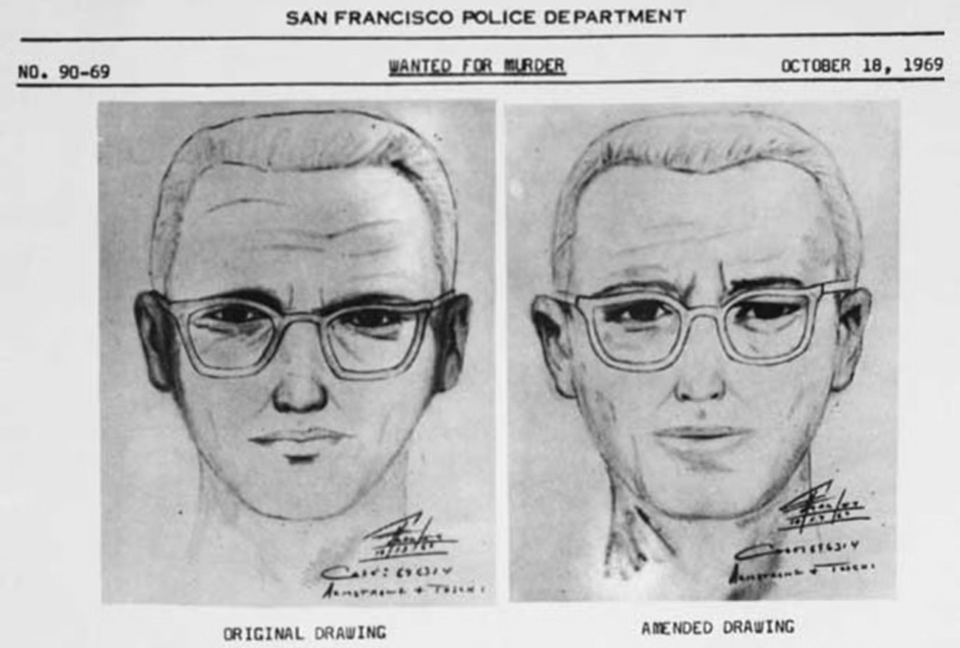
This crime differed significantly from earlier ones. It took place in a residential area, increasing the risk of being seen. In fact, several witnesses observed the killer and provided descriptions to the police.
In a critical error, dispatchers mistakenly described the suspect as a Black male, leading officers to overlook a white man who matched the actual description. This mistake likely allowed the Zodiac to escape.
Shortly afterward, the killer mailed a letter to a newspaper that included a piece of Stine’s shirt as proof. He also mocked the police for their failure, further demonstrating his desire to control the narrative.
The Peak of Communication and Terror (1969–1970)
Following the Presidio Heights murder, the Zodiac entered his most active communication phase.
He sent numerous letters to newspapers and police, many containing cryptograms, threats, and bizarre claims. Some letters described plans to build bombs or attack school buses, creating widespread panic.
One of his most famous ciphers, known as the Z340, remained unsolved for over 50 years before finally being decoded in 2020. Like earlier messages, it reinforced his desire for attention and recognition.
During this period, the Zodiac claimed responsibility for dozens of murders, though investigators could only confirm a handful. The uncertainty surrounding his claims made him even more frightening, as people could not determine the true extent of his actions.
Possible Additional Victims and Expanding Fear (Late 1960s–1970s)
As the Zodiac’s notoriety grew, numerous unsolved cases were examined for possible connections.
The disappearance of Donna Lass, the murder of Cheri Jo Bates, and other cases were considered potential Zodiac crimes. In some instances, letters from the Zodiac appeared to reference these events, though the authenticity of these claims remains debated.
This period highlights the expanding fear surrounding the Zodiac. He was no longer just a killer tied to specific crimes—he became a symbol of unpredictability and hidden danger.
Communities across California—and eventually the entire country—were affected by the fear he generated.
The Disappearance of the Zodiac (Early 1970s)
By the early 1970s, the Zodiac’s activity began to decline.
Although a few letters continued to arrive, their tone and frequency changed. The last widely accepted Zodiac letter was sent in 1974 and referenced popular culture rather than violence.
After that, the Zodiac disappeared completely.
This sudden silence has never been explained. Some believe he died, others think he was imprisoned for unrelated crimes, and some suggest he simply chose to stop.
His disappearance remains one of the most puzzling aspects of the case.
The Investigation and Suspects (Ongoing)
Over the decades, investigators have examined numerous suspects.
Arthur Leigh Allen was the most prominent, but evidence against him remained circumstantial. Other suspects have been proposed, but none have been definitively linked to the crimes.
Advances in forensic science, particularly DNA analysis, have provided new hope. However, degraded evidence and limited material have made it difficult to reach a conclusive answer.
The case remains open, and interest continues to grow.
Legacy and Cultural Impact (1970s–Present)
The Zodiac Killer has become one of the most infamous figures in criminal history. His story has inspired books, films, and documentaries. The combination of violence, mystery, and cryptography has made the case particularly compelling.
The Zodiac’s ability to evade capture has ensured his place in popular culture, and his crimes continue to be studied by both professionals and enthusiasts.
The Enduring Mystery
More than fifty years later, the Zodiac Killer’s identity remains unknown. Despite countless investigations and theories, no definitive conclusion has been reached. The case continues to fascinate and disturb, serving as a reminder of how some mysteries may never be solved.
The Zodiac Killer remains a symbol of fear, intelligence, and unanswered questions—an enduring mystery that continues to captivate the world.