Early Life (2003–2007)
Madeleine Beth McCann was born on May 12, 2003, in Leicester, England, to Kate Marie McCann (née Healy) and Gerald Patrick McCann. She lived with her parents and her younger twin siblings, born in 2005, in the village of Rothley, Leicestershire. Both of her parents are highly educated medical professionals and practicing Roman Catholics. Kate McCann trained as a doctor at the University of Dundee, specializing in obstetrics and gynecology, anaesthetics, and general practice. Gerry McCann, meanwhile, studied physiology and sports science at the University of Glasgow before obtaining a medical degree there and eventually becoming a consultant cardiologist. The couple married in 1998, welcoming Madeleine in 2003, followed by the birth of twins in 2005.
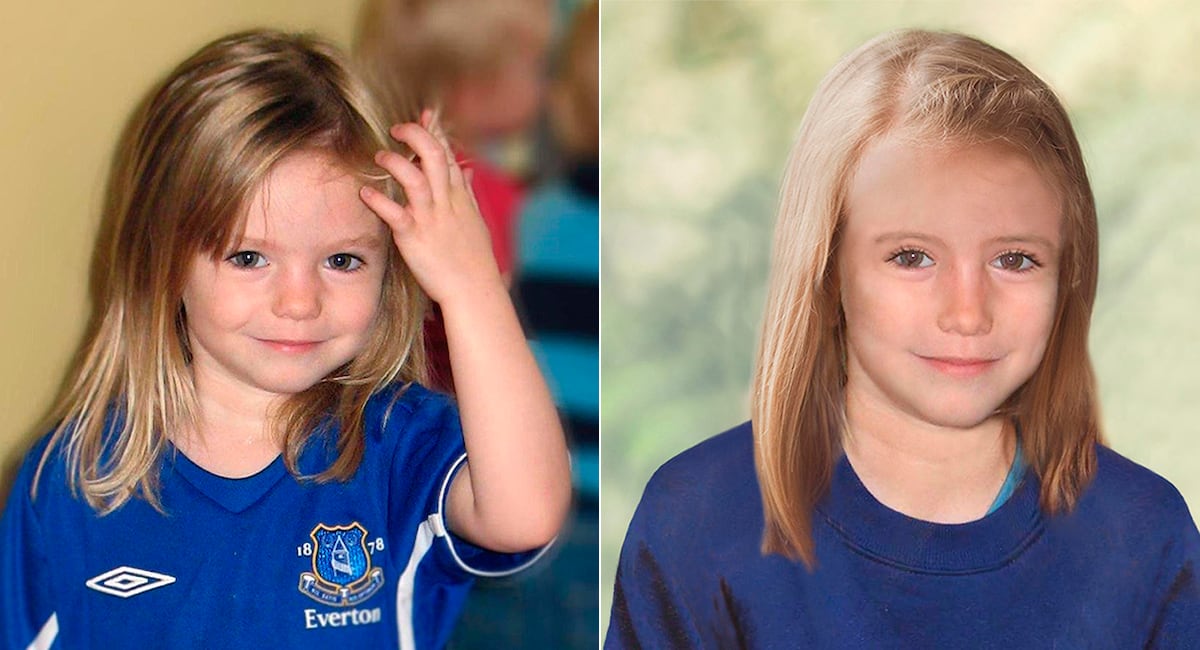
Madeleine was described as a lively and sociable child, with distinctive physical features. She had blonde hair and striking blue-green eyes, a small brown mark on her left calf, and a unique dark stripe across the iris of her right eye. Following her disappearance, the McCanns worked with forensic artists to produce age-progressed images of Madeleine, showing how she might look at ages six, nine, and beyond. These images have been widely circulated in an effort to locate her and maintain public awareness of her case.
The family frequently engaged in activities typical for children of Madeleine’s age, including trips to local parks, swimming lessons, and outings in the English countryside. The McCanns’ strong Catholic faith influenced both their parenting style and their community involvement. Friends and neighbors described Madeleine as a curious, playful, and affectionate child, well-liked by peers and family alike.
Family Vacation and Disappearance (April–May 2007)
In late April 2007, the McCanns planned a spring vacation to the Algarve region of Portugal, a popular tourist destination for British families. They arrived in Praia da Luz on April 28 for a seven-night stay. The family rented apartment 5A, a two-bedroom ground-floor unit in the Waterside Village complex, a resort catering mainly to British tourists. The apartment was located near the Ocean Club resort, where other friends and families were staying in adjacent units.
On May 3, 2007, the day before their scheduled departure, Madeleine and her twin siblings spent most of the day at the resort’s Kids’ Club. This facility allowed children to play safely under supervision while parents could relax or engage in activities of their own. Madeleine was last photographed by her mother at 14:29, sitting near the pool with her father and one of her siblings. That afternoon, the children returned to apartment 5A for lunch and swimming.
Later that evening, the McCanns put the children to bed around 19:00. Madeleine was dressed in short-sleeved pink-and-white pyjamas, slept with her comfort blanket, and had her soft toy, Cuddle Cat, by her side. The children’s bedroom had a sliding glass door that opened to the resort grounds and a window with shutters; both were closed at bedtime.
At approximately 20:30, Kate and Gerry left the apartment to dine with friends at the resort’s tapas restaurant, located about 55 meters from their unit. Throughout the evening, they periodically checked on the children, establishing a routine of monitoring while having dinner. Gerry McCann made the first check at 21:05, reporting that everything appeared normal, though he noted that the bedroom door was slightly ajar.
Around 21:15, Jane Tanner, a family friend, reported seeing a man carrying a child near apartment 5A. This sighting initially raised alarm but was later considered a red herring by Scotland Yard, as the individual was not connected to Madeleine’s disappearance. By 22:00, Kate returned to the apartment and discovered that Madeleine was missing. She immediately noticed that the bedroom window and shutter were open, though Madeleine’s blanket and Cuddle Cat remained on the bed. Panic set in, and resort staff, along with other guests, began searching the premises. The initial search lasted until 04:30 the following morning, under the assumption that Madeleine might have wandered off within the resort.
Initial Police Response (May–June 2007)
Portuguese authorities responded quickly to the disappearance. Early involvement included officers from the Guarda Nacional Republicana, followed by the Polícia Judiciária (PJ), Portugal’s criminal investigative police. Search dogs were deployed, and efforts were extended across Praia da Luz to cover the streets, beach areas, and surrounding resorts. However, the investigation faced multiple challenges and procedural mistakes. The crime scene—the McCanns’ apartment—was not secured adequately, allowing potential contamination of evidence. Descriptions of Madeleine were not promptly circulated, roadblocks and patrols were delayed, and not all vacationers or resort staff were interviewed immediately.
Leicestershire Police in the United Kingdom coordinated efforts to support the Portuguese authorities, although differences in investigative procedures created tension. British officers relied on digital case management systems, while Portuguese officers required formal court permissions for specific actions, which slowed certain operations. Despite these challenges, the early investigation prioritized canvassing local neighborhoods, checking vehicles and buildings, and reviewing flight and border records.
First Suspect: Robert Murat (May 2007)
Twelve days after Madeleine’s disappearance, Robert Murat, a British-Portuguese property consultant living approximately 140 meters from apartment 5A, became the first publicly named suspect. Murat, who had volunteered as a translator for the Portuguese authorities, claimed he wanted to assist due to having a daughter of similar age.
Suspicion arose from reports placing him near the apartment around the time of Madeleine’s disappearance, along with his proactive inquiries about the case. Police conducted thorough searches of his residence, including draining his swimming pool and examining vehicles and electronic devices. Murat consistently denied any involvement. By July 2008, he was officially cleared of suspicion and later received £600,000 in libel settlements for media publications falsely implying guilt.
The McCanns as Arguidos (September 2007)
Following early forensic work, Portuguese authorities began to suspect that Madeleine may have died accidentally in the apartment and that her parents concealed the incident. Two British cadaver dogs, Keela and Eddie, indicated potential traces of human remains in the McCanns’ apartment and in their rental car. DNA evidence suggested the presence of Madeleine’s biological material, though results were inconclusive and heavily debated.
On September 7, 2007, Kate and Gerry McCann were formally named arguidos, or official suspects, under Portuguese law. They underwent extensive questioning and were advised not to answer certain inquiries. Investigators proposed that Madeleine’s alleged accident, combined with the parents’ “restaurant checks” and the actions of their friends—the so-called “Tapas Seven”—might have been attempts to cover up the incident.
The McCanns returned to England on September 9, 2007, after several days of interrogation. Portuguese authorities formally lifted their suspect status on July 21, 2008, following a review by the country’s attorney general, who concluded there was no credible evidence linking the couple to Madeleine’s disappearance.
Private Investigations and Madeleine’s Fund (2007–2011)
In the wake of the disappearance, the McCanns launched Madeleine’s Fund: Leaving No Stone Unturned Ltd on May 15, 2007. The fund aimed to raise awareness and finance private investigation efforts. The website received millions of visits worldwide within days, and the family traveled internationally to maintain media attention. Highlights included visits to the Vatican, media campaigns in Europe and North Africa, and public awareness events, such as balloon releases in multiple cities.
Private investigators were hired to follow leads across Portugal, Spain, and Morocco. Methods included creating e-fits of potential suspects, conducting ground radar scans in Praia da Luz, and interviewing hundreds of witnesses.
In 2011, the UK’s Operation Grange was established under Home Secretary Theresa May. Led by Scotland Yard, the operation involved 29 detectives and eight civilians. The investigation aimed to examine new and existing leads, translating thousands of documents and reviewing 650 sex offenders and 8,000 reported sightings. By 2015, over 1,300 witness statements and more than 1,000 exhibits had been collected, making it one of the most extensive missing-person investigations in UK history.
Key Sightings (May 2007–2013)
Several eyewitness accounts were considered crucial to reconstructing the events of May 3, 2007:
Jane Tanner Sighting (21:15, May 3): Tanner reported seeing a man carrying a child near apartment 5A. Scotland Yard later determined this individual was unrelated to Madeleine’s disappearance.
Smith Sighting (22:00, May 3): Martin and Mary Smith, walking along Rua da Escola Primária toward the beach, observed a man carrying a young girl in light pyjamas. This sighting was later considered the most significant for constructing the timeline of the disappearance.
Other Witnesses: Additional individuals reported suspicious activity near apartment 5A and neighboring areas. These accounts included men seen near the complex during the evening of May 3 and the days following the disappearance.
Media and Social Attention
Madeleine McCann’s disappearance quickly became one of the most heavily reported missing-person cases in modern history. The media coverage was intense and global, with outlets from the UK, Germany, and Portugal providing continual updates.
The McCanns faced scrutiny and harassment, particularly from tabloid press and social media platforms. Online communities often unfairly accused them of involvement, circulating theories about negligence or a cover-up. Despite this, the McCanns actively engaged with the media to maintain awareness of their daughter’s case, participating in interviews and public campaigns while avoiding speculation that could harm the investigation.
They successfully pursued libel cases against multiple newspapers, including Express Newspapers, receiving over £1 million in damages between 2008 and 2011. In 2011, both Kate and Gerry McCann provided testimony at the Leveson Inquiry, advocating for greater accountability and regulation in media reporting. Netflix’s 2019 documentary, The Disappearance of Madeleine McCann, explored the case extensively but was produced without participation from the McCanns, who discouraged their involvement to avoid further media intrusion.
German Investigations (2020–2025)
In June 2020, German authorities named Christian Brückner, a convicted child sex offender, as the primary suspect in Madeleine’s disappearance. Brückner, serving a sentence for the 2005 rape of a 72-year-old American woman, is scheduled for release in September 2025. German prosecutors claimed to possess “concrete evidence” linking him to Madeleine’s abduction, though formal charges have been delayed due to legal and jurisdictional considerations.
Reports indicated that Brückner’s Jaguar XJR6 changed ownership the day after the disappearance, heightening suspicion. A British witness alleged that Brückner had made cryptic comments regarding “a horrible job” in Praia da Luz the night before Madeleine vanished. German authorities have continued to build the case against him, viewing him as the central figure in an ongoing cross-border investigation.
Other Investigations and Suspects
Throughout the years, authorities and private investigators examined multiple potential suspects:
British Pedophiles: Individuals such as Raymond Hewlett were investigated, although some later retracted their statements.
Canary Islands Window Cleaners: Two convicted pedophiles operating a cleaning business in Spain were considered due to their travel patterns in 2007.
Northern Irish Suspect: A man living in Carvoeiro, Portugal, convicted of sexual assaults on his daughters, was investigated.
Swiss National Urs Hans von Aesch: Linked to the disappearance of Ylenia Lenhard, he was considered a possible suspect.
Clement Freud: The late British broadcaster, accused of sexual abuse, was noted due to his friendship with the McCanns after Madeleine went missing.
Despite extensive efforts, no additional suspect has been definitively linked to Madeleine’s disappearance, and the focus remains on Brückner.
Current Status
Madeleine McCann remains missing. Operation Grange continues to follow leads, although progress is limited by time, jurisdictional constraints, and fading eyewitness accounts. German authorities maintain Brückner as the prime suspect, operating under the assumption that Madeleine is deceased.
Madeleine’s Fund continues to raise awareness, providing resources for investigations and public campaigns, though its activity has decreased over the years. The McCanns remain active in advocacy for missing children, highlighting child safety initiatives, media regulation, and cross-border cooperation for abduction cases.
The case has influenced international law enforcement practices, improved protocols for missing children, and generated discussions about media ethics, social responsibility, and public engagement with missing-person campaigns. Despite decades of investigation, Madeleine’s fate remains unknown, making her disappearance one of the most enduring mysteries in recent history.