Early Life and Family Struggles (1924–1942)
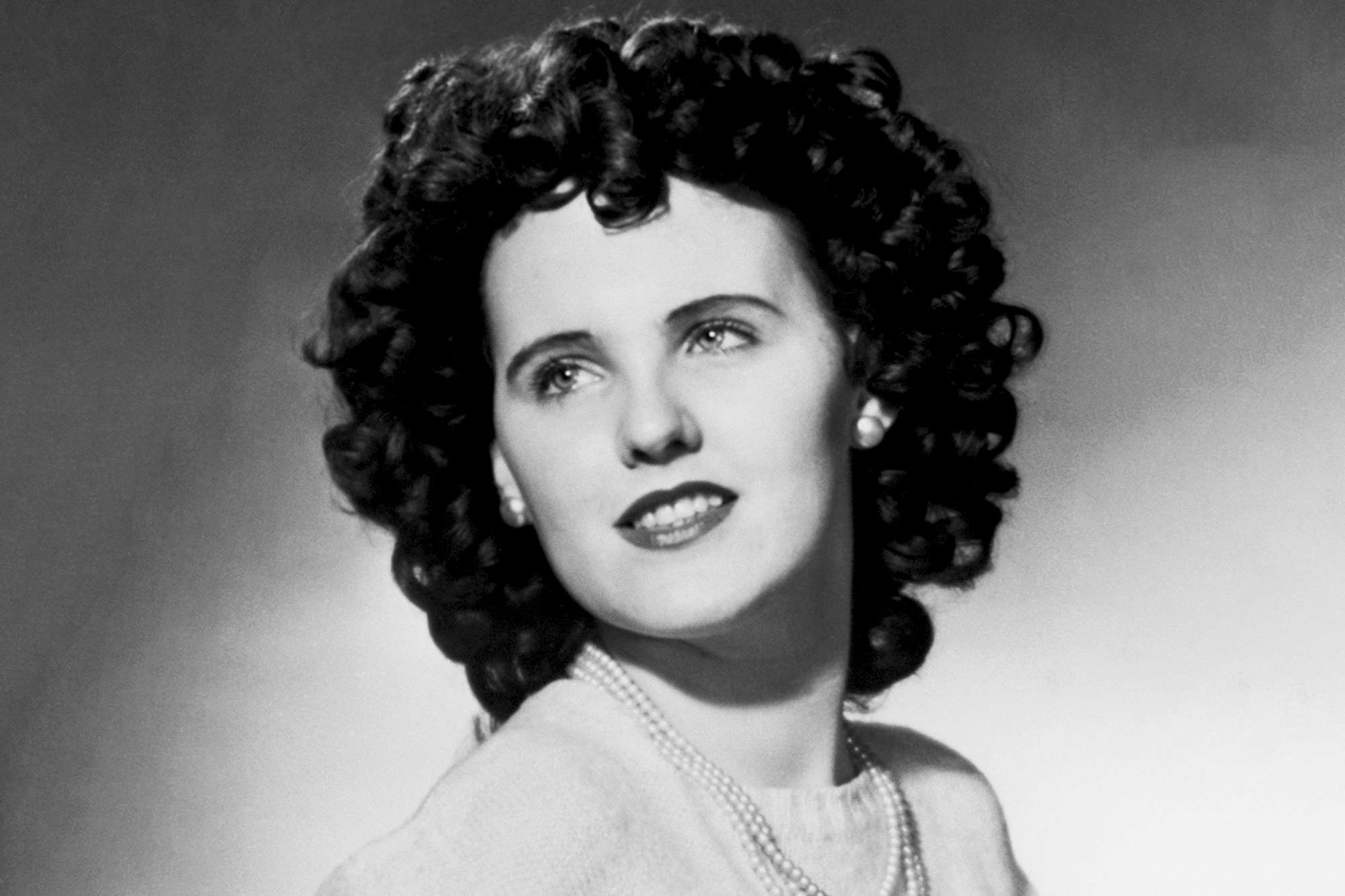
Elizabeth Short was born on July 29, 1924, in Boston, Massachusetts, the third of five daughters. Her parents, Phoebe May Sawyer and Cleo Alvin Short Jr., initially lived a modest life, but the family’s stability collapsed after her father lost his savings in the Wall Street Crash of 1929.
In 1930, her father disappeared, leaving his car abandoned on a bridge. The family believed he had died by suicide, forcing Elizabeth’s mother to raise five children alone while working as a bookkeeper. This early trauma shaped Elizabeth’s unstable upbringing.
As a teenager, Elizabeth suffered from severe asthma and bronchitis, eventually requiring lung surgery at age 15. Doctors advised her to spend time in milder climates, so she regularly traveled to Florida during winters. These frequent relocations disrupted her education, and she eventually dropped out of high school.
Her early life was marked by financial hardship, fragile health, and emotional instability—factors that contributed to her later transient lifestyle.
Reconnection and Instability (1942–1946)
In 1942, Elizabeth’s father reappeared, revealing he had been alive and living in California. At 18, she moved to Vallejo to reunite with him, but their relationship quickly deteriorated, and she left within months.
She then began drifting between cities in California and Florida, relying on acquaintances and short-term work. During this period, she held various low-paying jobs, including working at military base facilities. Her relationships were often unstable, and she depended heavily on others for housing and support.
While in Florida, she met Major Matthew Michael Gordon Jr., an Army Air Force officer. He reportedly proposed marriage while recovering from injuries sustained in a crash. Elizabeth accepted, but Gordon died in another plane crash in 1945 before they could marry.
In 1946, Elizabeth moved to Los Angeles, hoping to build a new life. Though often described as an aspiring actress, there is no evidence she secured acting roles. She instead worked as a waitress and lived a transient lifestyle, staying with friends or acquaintances.
During this time, she developed a reputation for socializing widely, often attracting attention due to her striking appearance—dark hair, pale skin, and distinctive fashion.
Final Months in Los Angeles (Late 1946 – January 1947)
In the final six months of her life, Elizabeth lived primarily in Los Angeles, moving frequently between residences. She was financially unstable and relied on friends, acquaintances, and occasional romantic relationships.
Shortly before her death, she was involved with Robert “Red” Manley, a married salesman. On January 9, 1947, he drove her from San Diego to Los Angeles. According to his account, he dropped her off near the Biltmore Hotel, where she planned to meet her sister.
Multiple witnesses later reported seeing Elizabeth in the hotel lobby and nearby locations that day. These sightings would become the last confirmed moments of her life.
After that, she disappeared.
The Murder and Discovery (January 1947)
On January 15, 1947, Elizabeth’s body was discovered in a vacant lot in the Leimert Park area of Los Angeles. The crime scene shocked both investigators and the public due to its extreme brutality.
Her body had been severed in two and completely drained of blood. The positioning of the body appeared deliberate, suggesting staging. Her face had been cut from the corners of her mouth to her ears, creating what is known as a “Glasgow smile.” Additional mutilations were evident, including removal of flesh and precise surgical cuts.
The killer had also washed the body, indicating a degree of planning and composure. The nature of the injuries suggested either medical knowledge or familiarity with anatomical procedures.
Autopsy Findings and Cause of Death
The autopsy revealed that Elizabeth died from hemorrhaging and shock caused by blows to the head and face. Despite the severe mutilation, much of it appeared to have occurred after death.
The procedure used to bisect her body—hemicorporectomy—was known in surgical training, leading investigators to consider suspects with medical backgrounds.
There were ligature marks on her wrists, ankles, and neck, indicating restraint. While there were suspicions of sexual assault, forensic tests did not confirm the presence of sperm.
The condition of the body suggested the killer was methodical, possibly experienced, and took deliberate steps to remove evidence.
Media Sensation and the “Black Dahlia” Identity
The case quickly became a media spectacle. Newspapers sensationalized the story, giving Elizabeth the nickname “Black Dahlia,” likely inspired by the film The Blue Dahlia.
Journalists from newspapers owned by William Randolph Hearst played a significant role in shaping public perception. In one notorious instance, reporters misled Elizabeth’s mother into believing her daughter had won a beauty contest before revealing her death.
The press portrayed Elizabeth as a mysterious and provocative figure, often exaggerating or fabricating aspects of her life. She was described as an “adventuress,” and rumors circulated about her personal life, including claims she was a sex worker or had unconventional relationships. None of these claims were substantiated.
This intense media coverage transformed the case into one of the most famous unsolved murders in American history.
Investigation and Evidence
The Los Angeles Police Department launched a massive investigation, interviewing over 150 suspects. Despite the scale, the case quickly became complicated by false leads and media interference.
In the days following the discovery, a man claiming to be the killer contacted newspapers. Shortly after, a package was sent containing Elizabeth’s personal belongings, including her birth certificate and address book. The items had been cleaned with gasoline, eliminating fingerprints.
Additional letters followed, taunting authorities and promising surrender, but no suspect ever came forward.
Police also recovered items believed to belong to Elizabeth near the crime scene, but again, all potential evidence had been carefully wiped clean.
Suspects and Theories
Over the years, the case attracted numerous suspects and confessions—many of them false.
One of the most widely discussed suspects was George Hodel, a physician whose son later accused him of the crime. Hodel’s medical background aligned with the surgical precision of the mutilation, and recorded statements suggested possible involvement, though no charges were ever filed.
Other suspects included Leslie Dillon, a mortician’s assistant, and various individuals connected to Elizabeth socially. Some theories suggested she was killed due to knowledge of criminal activity, while others pointed to personal motives.
Despite decades of investigation and speculation, no suspect was definitively linked to the crime.
Related Crimes and Speculation
Investigators explored potential connections between Elizabeth’s murder and other unsolved cases, including the Cleveland Torso Murders. While similarities existed—particularly in dismemberment—no conclusive link was established.
Other theories connected the case to the “Lipstick Murders” in Chicago and a series of unsolved killings in Los Angeles involving young women. These connections remain speculative.
The sheer number of unsolved violent crimes during that era contributed to the difficulty in isolating a single perpetrator.
Legacy and Cultural Impact
The Black Dahlia case remains one of the most infamous unsolved murders in American history. Its combination of brutality, mystery, and media sensationalism ensured lasting public fascination.
Elizabeth was buried in Oakland, California, but her story continued to evolve through books, films, and ongoing investigations.
One of the most notable fictional portrayals is the novel The Black Dahlia by James Ellroy, which reimagines the case within a broader narrative of corruption and crime in postwar Los Angeles.
Over time, the case has inspired countless theories, documentaries, and reinterpretations. However, many historians emphasize that the real Elizabeth Short has often been overshadowed by myth and media distortion.
Conclusion
Elizabeth Short’s life was shaped by instability, health struggles, and a search for opportunity. Her death, however, transformed her into a cultural symbol—the “Black Dahlia.”
Despite decades of investigation, the case remains unsolved. The lack of closure, combined with sensational media coverage and persistent speculation, has ensured that her story continues to capture public attention.
At its core, the case reflects not only a brutal crime but also the power of media in shaping narratives—sometimes at the expense of truth.