Origins and Hidden Identity (1946–1969)
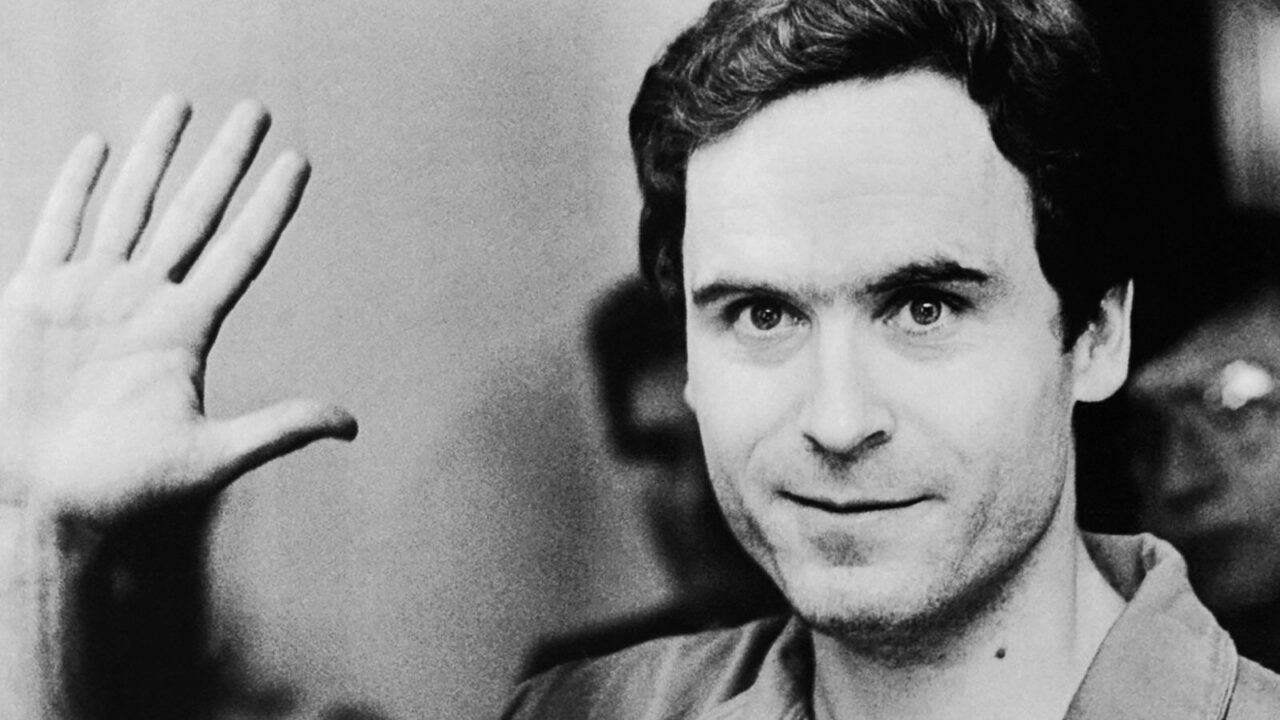
Ted Bundy was born Theodore Robert Cowell on November 24, 1946, in Burlington, Vermont, to Eleanor Louise Cowell. His father’s identity remains uncertain. To avoid stigma, Bundy was raised by his grandparents in Philadelphia, believing they were his parents and that his mother was his sister.
This deception deeply impacted him. Accounts differ on when he learned the truth, but the revelation caused lasting resentment. Although Bundy later spoke respectfully about his grandfather, family members described the man as abusive and volatile.
From an early age, Bundy exhibited disturbing behavior. Relatives recalled incidents involving knives, while neighbors described cruelty to animals and manipulative, sadistic tendencies toward other children. He also developed voyeuristic habits and consumed violent sexualized material, which later shaped his fantasies.
Socially, Bundy portrayed himself as shy and detached. While he claimed difficulty understanding relationships, peers later described him as relatively normal and even well-liked in high school. Despite this, he engaged in petty crimes like theft and burglary.
College Years and Psychological Development (1965–1973)
Bundy attended the University of Puget Sound before transferring to the University of Washington, initially studying Chinese. In 1967, he fell deeply in love with a woman often referred to as “Diane Edwards.” Their breakup in 1968 profoundly affected him and is often cited as a turning point in his psychological development.
After the breakup, Bundy drifted—working low-wage jobs, traveling, and becoming increasingly obsessed with violent fantasies. During this period, he also discovered the truth about his parentage (according to some accounts).
In 1969, he began a relationship with Elizabeth Kloepfer, a single mother. He acted as a father figure to her daughter while maintaining a façade of normalcy.
By 1970, Bundy returned to the University of Washington as a psychology major. He excelled academically, worked at a suicide hotline, and became involved in politics, assisting campaigns for prominent figures. Those around him described him as intelligent, charming, and empathetic—qualities that masked his darker impulses.
In 1973, Bundy rekindled his relationship with Edwards while still dating Kloepfer. After regaining her affection, he abruptly ended the relationship without explanation—an act he later admitted was deliberate revenge.
Transition to Violence (1969–1974)
The exact start of Bundy’s murders remains unclear. He gave conflicting confessions, suggesting killings as early as 1969. However, his confirmed attacks began in 1974.
Before escalating to murder, Bundy engaged in voyeurism, stalking, and attempted abductions. He refined his methods, learning how to approach victims, avoid detection, and control crime scenes.
This phase represents his transformation from fantasizing offender to active predator.
Pacific Northwest Murder Spree (1974)
Bundy’s confirmed killing spree began in Washington and Oregon in 1974. His first known victim, Karen Sparks, survived a brutal assault but suffered permanent brain damage.
He then began targeting young college women, typically luring them by pretending to be injured (using a sling or crutches) and asking for help. Victims were often last seen near campuses.
Key victims included:
- Lynda Ann Healy
- Donna Gail Manson
- Susan Rancourt
- Roberta Parks
- Brenda Ball
- Georgann Hawkins
Bundy’s crimes escalated in boldness. At Lake Sammamish State Park, he abducted two women in broad daylight after introducing himself as “Ted.” Witnesses provided detailed descriptions, leading to a composite sketch.
Despite multiple reports identifying him—including from his girlfriend—police initially dismissed him due to his clean-cut image.
Expansion to Utah, Idaho, and Colorado (1974–1975)
In late 1974, Bundy moved to Utah and resumed killing. His crimes became more frequent and brutal, including abductions of teenage girls and violent assaults.
Notable developments in this phase:
- Use of authority impersonation (e.g., posing as a police officer)
- Increased sadism and control over victims
- More calculated disposal of bodies
Victims included Melissa Smith, Laura Aime, and others whose remains were never found. He also committed kidnappings, including the attempted abduction of Carol DaRonch, who escaped and later identified him.
Bundy’s double life continued—attending law school while committing murders across multiple states.
Arrest and Investigation (1975–1976)
Bundy was arrested in August 1975 in Utah after suspicious behavior during a traffic stop. Police discovered tools associated with burglary and restraint in his vehicle.
Further investigation linked him to multiple crimes:
- Witness identifications
- Physical evidence (hair samples)
- Testimony from survivors
He was convicted in 1976 for kidnapping and assault (DaRonch case) and sentenced to prison. However, evidence tying him to murders was still developing.
Escapes and Escalation (1977)
Bundy escaped custody twice in 1977:
First escape: Jumped from a courthouse window in Colorado but was recaptured after six days.
Second escape: Successfully fled from jail through a hole in the ceiling, eventually traveling across the country to Florida.
These escapes demonstrated his intelligence, patience, and determination.
Florida Killings and Final Arrest (1978)
In Florida, Bundy committed some of his most violent crimes.
At Florida State University’s Chi Omega sorority house, he attacked multiple women in a single night, killing two and severely injuring others. The attack was shocking due to its speed, brutality, and proximity to witnesses.
He later abducted and murdered 12-year-old Kimberly Leach.
Bundy was arrested again in February 1978 after a stolen vehicle stop. This time, evidence against him was overwhelming.
Trials, Media, and Manipulation (1979–1980)
Bundy’s trials became highly publicized. He often represented himself, using the courtroom as a stage.
Key aspects:
- Televised proceedings
- Forensic evidence (including bite-mark analysis)
- Eyewitness testimony
He was convicted of multiple murders and sentenced to death. During trial, he even married Carole Ann Boone in court, highlighting his manipulative personality.
Confessions and Psychological Insight (1980–1989)
While on death row, Bundy gave interviews discussing his crimes in the third person. He described his motivations as rooted in control, possession, and violent fantasy.
He admitted to:
- Necrophilia
- Revisiting crime scenes
- Decapitation and keeping body parts
Bundy also attempted to assist in profiling other killers, including the Green River Killer case.
His confessions revealed a progression from impulsive acts to calculated predation.
Execution (1989)
After years of appeals, Bundy was executed on January 24, 1989, in Florida.
Shortly before his death, he confessed to numerous murders, though the full number remains unknown. Estimates suggest at least 30 victims, but the true count may be higher.
Legacy and Criminal Profile
Bundy remains one of the most studied serial killers in history. His case reshaped public understanding of criminal psychology.
Key characteristics:
- Superficial charm and intelligence
- Double life (professional vs. predator)
- Escalating violence and control
- Ability to evade detection despite multiple warnings
His crimes highlighted the danger of relying on stereotypes—Bundy did not fit the expected image of a violent criminal.