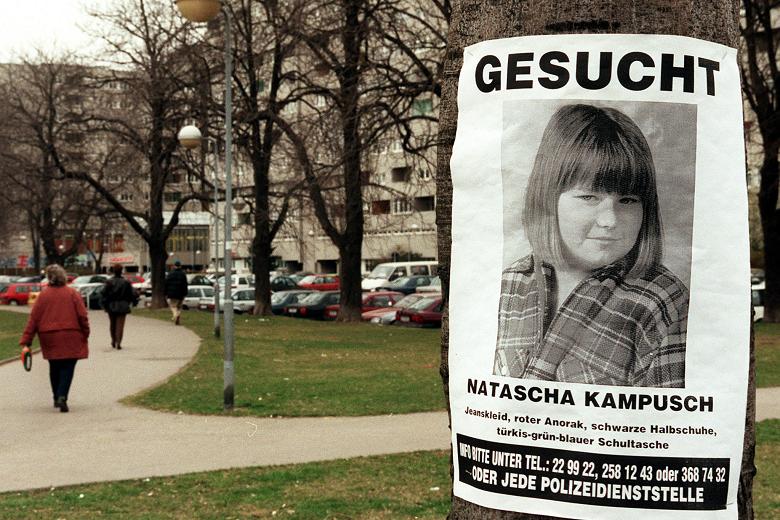
Natascha Maria Kampusch (born 17 February 1988) is an Austrian author and former talk show host.
Abducted at the age of ten on her way to school in Vienna in 1998, she spent 3,096 days in captivity at the hands of Wolfgang Přiklopil, a man who meticulously planned her abduction and exercised complete control over her life.
Her eventual escape in 2006 shocked the world, not only because of the extraordinary endurance required to survive such an ordeal, but also because of the unusual complexities surrounding her recovery and the societal reactions that followed.
Unlike many other abduction cases that end in tragedy, Natascha survived, endured, and reclaimed her place in society.
Her story brought a powerful and distinctive voice—one that challenges common perceptions of victimhood, trauma, and resilience.
Early Life and Family Background
Natascha Maria Kampusch was born on February 17, 1988, in Vienna, Austria.
Her childhood was, in many respects, typical of Viennese life, but it was also shaped by her parents’ separation and the emotional instability that followed.
Kampusch’s family included two adult sisters, and five nieces and nephews. Sirny and Koch separated while Kampusch was still a child and divorced after her abduction.
Kampusch spent time with both of them, and had returned to her mother’s home from a holiday with Koch the day before her kidnapping.
The Abduction
On the morning of 2 March 1998, 10-year-old Natascha left her family’s home for school—but she never made it to school, nor did she return home.
Tragically, this short walk became the moment of opportunity for Wolfgang Přiklopil, a 35-year-old communications technician who had been meticulously planning an abduction for years.
He had constructed a hidden, reinforced cellar beneath his garage in Strasshof an der Nordbahn, a suburban area outside Vienna. This hidden space, secured with multiple doors and soundproofing, was specifically designed to hold a captive.
As Natascha made her way to school, Přiklopil abducted her using his white minivan.
Within hours, Natascha was inside the tiny cellar that would become her cage for the next eight years.
Witnesses later recalled seeing a child being pulled into the vehicle, but the police investigation at the time failed to properly follow up. Some neighbors even mentioned Přiklopil to authorities, but he was dismissed as an unlikely suspect because he had no prior criminal record.
Officials looked into potential connections to the crimes of French serial murderer Michel Fourniret after rumors of child pornography rings or organ theft surfaced.
The police expanded the search outside the country because Kampusch had been on a family vacation in Hungary a few days prior, therefore she had her passport with her when she left.
The matter was further complicated by accusations made against Kampusch’s family.
Captivity
The Cellar
The cellar where Natascha was held was small, claustrophobic, and deliberately designed to hide her existence from the outside world. Measuring just a 8 m2 (86 sq ft), it lacked windows and natural light. Access was only possible through a concealed entry point, and layers of security ensured that discovery would be almost impossible. The soundproofing prevented her screams from being heard, and Přiklopil controlled all access to the outside world.
Life in Cage
One of the most extraordinary aspects of Natascha’s story is that she entered captivity as a child and emerged as an adult. Her adolescence unfolded entirely under the control of her captor. She experienced puberty, growth, and the psychological changes of teenage years without peers, guidance, or the normal developmental milestones of education, friendships, and social exploration.
Life in captivity was harsh, monotonous, and tightly controlled. At first, Natascha was confined almost exclusively to the cellar. She was deprived of sunlight, meaningful human contact, and the developmental experiences that other children her age were enjoying. Her captor dictated when she could eat, sleep, or bathe.
Kampusch spent most of her time upstairs doing housework and cooking for Přiklopil. According to Dietmar Ecker, Kampusch’s media advisor, Přiklopil “would beat her so badly that she could hardly walk”.
He would also starve her, leaving her physically weak and unable to flee.
He also raped her.
Přiklopil provided her books to help her educate herself. She did not feel she had missed out on anything during her imprisonment, although she did add, “I spared myself many things, I did not start smoking or drinking, and I did not hang out in bad company,” but she also stated, “It was a place to despair.” She was given a television and radio to pass the time, but she was initially only allowed to view taped shows and listen to foreign radio stations so that she was unaware of the public search for her.
She attempted to flee by jumping out of Přiklopil’s car.
As the years passed, Přiklopil allowed her occasional supervised time outside of the cellar, but always under his strict dominance.
Přiklopil’s business colleague reported that Kampusch seemed comfortable and happy when he called at Přiklopil’s home to borrow a trailer. After turning 18, she was allowed to leave the house with Přiklopil, but he threatened to kill her if she tried to flee or attract attention. He later brought her skiing to a resort outside Vienna for a couple of hours. She originally denied that they had made the trip, but then conceded that it was genuine, but she maintained that no opportunity to escape had emerged during that period.
The Escape
On August 23, 2006 at 12:53 pm the eighteen-year-old Kampusch escaped out of Přiklopil’s home. She was vacuuming and cleaning her kidnapper’s white van in the garden at 12:53 p.m. when Přiklopil received a call on his cell phone. He walked away to answer the phone because the vacuum was making a lot of noise. When Přiklopil was out of sight, Kampusch escaped, leaving the vacuum cleaner running.
She rushed through nearby gardens and a street for around 200 meters (218 yards), hopping fences and pleading with passersby to contact the police, but they ignored her. Five minutes later, she knocked on the window of neighbour Inge T
The police showed up at 1:04 pm after the neighbor phoned them. Afterwards, Kampusch was brought to the Deutsch-Wagram police station.
Kampusch was identified by a scar on her body, her passport (discovered in the room where she was imprisoned), and DNA tests.
She was in decent physical health, however she appeared pale and disturbed and weighed just 48 kg (106 lb); she weighed 45 kg (99 lb) when she disappeared eight years ago. Her body mass index dropped to 14.8, well below the usual range of 18.5 to 24.9, and she barely grew 15 cm (5.9 in) while in captivity.
Her rescue stunned Austria and the world. After years of speculation, rumors, and failed investigations, the “lost girl” had returned.
Přiklopil, realizing she had escaped, fled to Vienna and soon afterward took his own life by stepping in front of a train.
He had apparently planned all along to end his own life rather than be caught, having told Kampusch, “they would not catch [him] alive”.
Before Kampusch escaped, Přiklopil was trying to procure false papers as a Czech citizen to “begin a new life” with Kampusch.
Life After Escape
Reintegration was not easy. Returning to society after eight years in isolation posed enormous challenges. She had to adjust to new technologies, cultural shifts, and the loss of a normal adolescence.
She continued her education and later published a memoir, 3,096 Days (2010), which became a bestseller and was adapted into a film.
Kampusch sympathized with her kidnapper in the documentary Natascha Kampusch: 3096 Days in Captivity. She stated, “I feel more and more sorry for him – he’s a poor soul” . According to investigators, she “cried inconsolably” when she learned he was dead; she had developed attachments for him and she lit a candle for him at the morgue.
She has, however, described her abductor as a “criminal”.
Newspapers quoting anonymous psychologists indicated that Kampusch had Stockholm syndrome, but Kampusch denies this. She suggests that individuals who use this term about her are disrespectful of her and deny her the right to define and evaluate the complicated relationship that she had with her abductor in her own terms.
On 12 August 2016, Natascha Kampusch released 10 Years of Freedom, her second book.
Memoir and Cultural Impact
Her memoir, 3,096 Days, remains a key primary source for understanding her ordeal. In it, she detailed not only the facts of her captivity but also the inner world she created to survive. The book challenged stereotypes of victimhood, presenting her as a resilient survivor rather than a passive figure.
The 2013 film adaptation brought her story to an even wider audience, though Natascha herself noted the difficulty of fully conveying the psychological reality of her experience through dramatization.
Kidnapper’s house
The house where Kampusch was imprisoned was built by Přiklopil’s grandfather, Oskar Přiklopil, after World War II.
During the Cold War period, Oskar and his son Karl built a bomb shelter, thought to be the origin of Kampusch’s cellar prison. Přiklopil took over the house in 1984 following his grandmother’s death.
Kampusch now owns the house where she was imprisoned. According to reports, she claimed the house from Přiklopil’s estate to safeguard it from vandalism and demolition. When the third anniversary of her escape came, it was discovered that she had become a frequent visitor to the property and was cleaning it.
In January 2010, Kampusch said she had retained the house because it was such a big part of her formative years, also stating that she would fill in the cellar if it is ever sold, adamant that it will never become a macabre museum to her lost adolescence. In 2011, the cellar was filled in; as of 2017 Kampusch still owned the house.